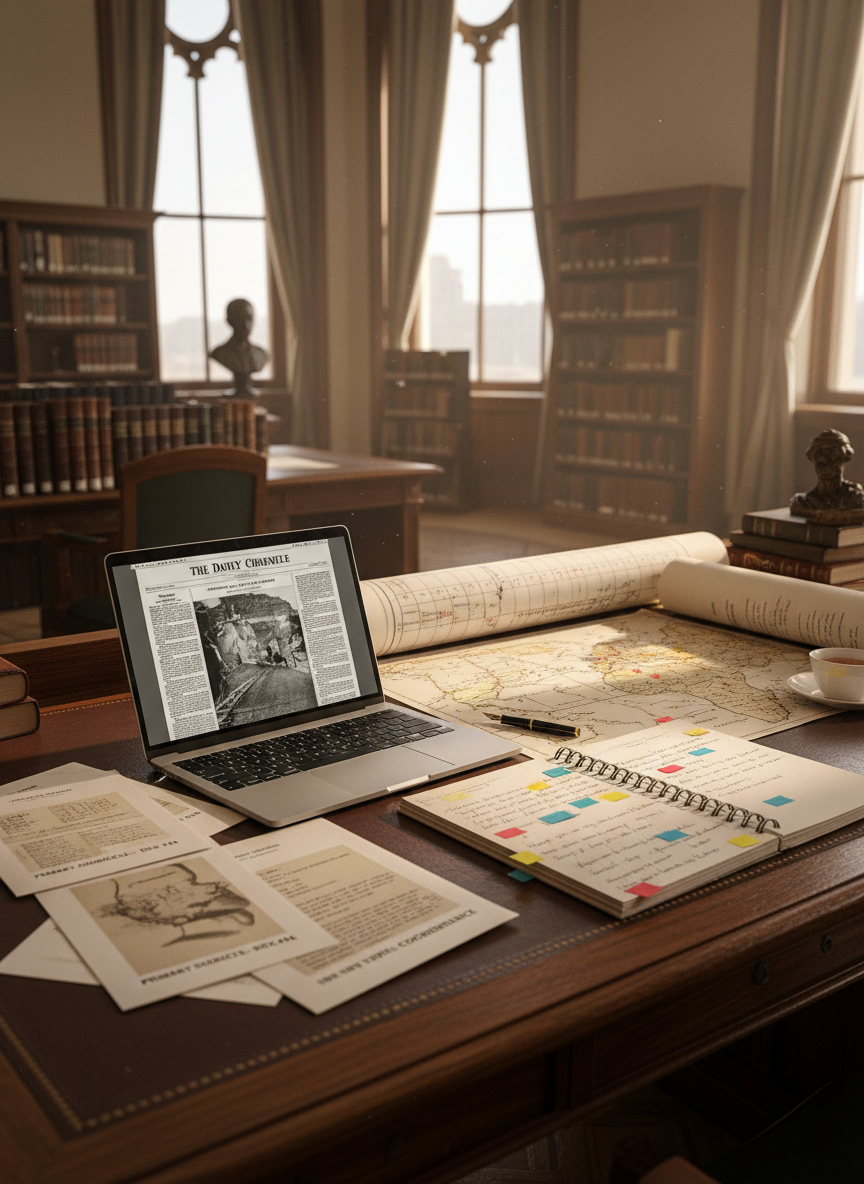
An elegant study desk in a quiet academic library, featuring a sleek, open laptop displaying a grayscale scan of an early 20th-century U.S. newspaper alongside a spiral-bound draft of a history paper marked with color-coded sticky flags. Surrounding the devices are printed primary source packets, a detailed timeline chart, and a vintage-style U.S. map with key regions subtly highlighted. Soft, diffused afternoon light filters through tall mullioned windows, casting gentle shadows on the desktop. Photographic realism with an eye-level composition and moderate depth of field, creating a sophisticated, contemplative mood that evokes meticulous student historical analysis and the transition from archival sources to polished research writing.

Our Mission

Discover how Exeter History Review elevates student scholarship through careful editing, mentoring, and thoughtful curation.

Mission

Exeter History Review showcases rigorous student historical research, from the 333 U.S. History paper to independent projects, upholding selective editorial standards. Learn how we support young historians and our review process on the About page.
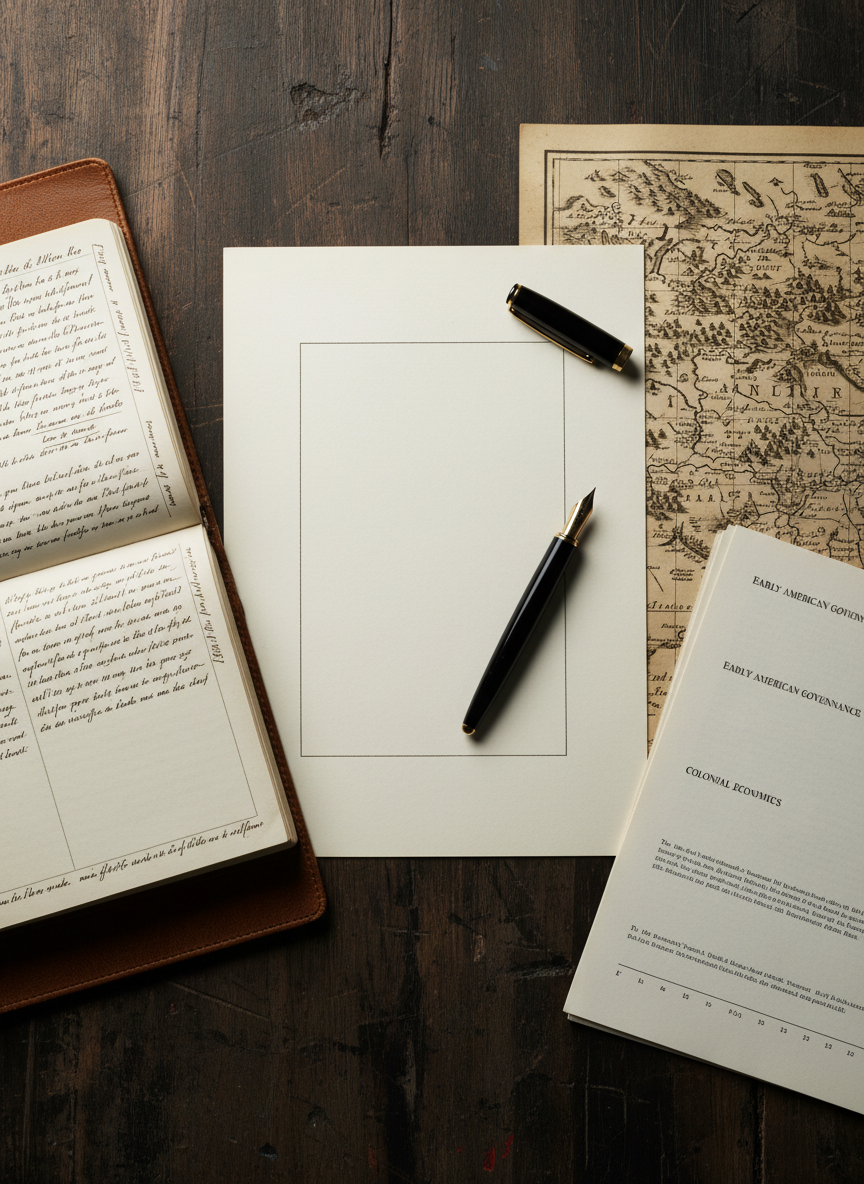
A carefully curated flat-lay composition of historical research tools arranged on a dark, textured tabletop: a high-quality fountain pen resting on a clean title page labeled only by a centered blank space, a bound notebook filled with neat marginal notes, a period-accurate reproduction of an 18th-century U.S. colonial map, and a stack of printed pages with visible section headings and footnote lines. Overhead, soft studio lighting creates even illumination with delicate shadows defining each object. The photographic realism emphasizes fine details such as paper fibers and ink sheen, with a minimalist, sophisticated mood that symbolizes the craft of writing the 333 U.S. history paper and other original student research.

Editorial Team

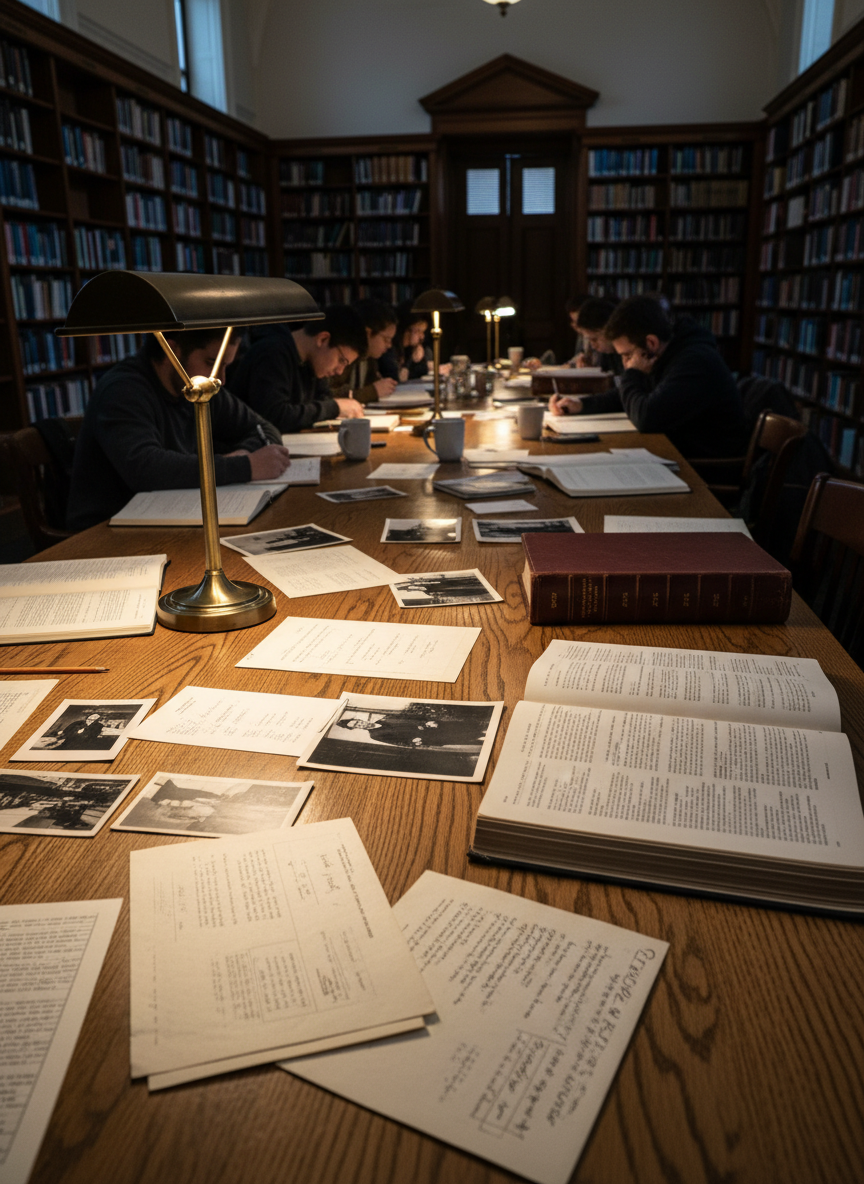
A long oak reading table in a historic college library, its surface filled with organized clusters of documentary evidence about a pivotal U.S. historical event: declassified government memorandum reproductions, black-and-white photograph prints, and bound volumes of congressional records. A slender metal desk lamp provides dramatic side lighting, illuminating the texture of the paper and the subtle grain of the wood, while rows of shadowed bookshelves extend into the background. Photographic realism, shot from a low, oblique angle that draws the eye along the table toward the vanishing point, creating a serious, immersive atmosphere that conveys depth, rigor, and the collaborative spirit of a student history journal.

Aarav Sharma

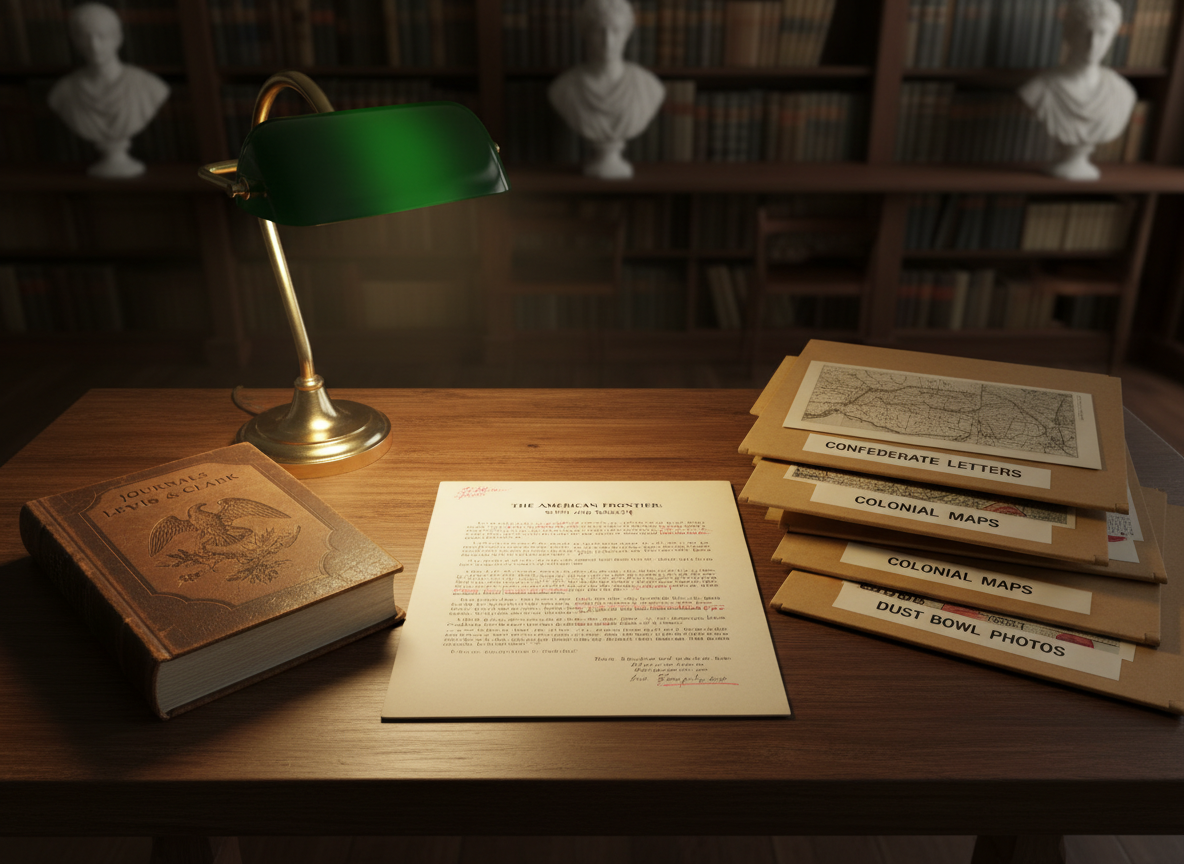
A meticulously arranged wooden seminar table covered in archival U.S. history materials: a thick, typewritten research paper with crisp, cream-colored pages, a worn leather-bound primary source volume, and several neatly stacked manila folders brimming with facsimile documents and maps. A brass library lamp with a green glass shade casts focused, warm light across the paper, revealing annotations and underlining, while the surrounding paneled walls and tall shelves fade into soft blur. Photographic realism from a slightly elevated angle, with a calm, scholarly atmosphere and rich, subdued tones, emphasizing rigorous student historical research in a serious academic setting.

Mateo García

An elegant study desk in a quiet academic library, featuring a sleek, open laptop displaying a grayscale scan of an early 20th-century U.S. newspaper alongside a spiral-bound draft of a history paper marked with color-coded sticky flags. Surrounding the devices are printed primary source packets, a detailed timeline chart, and a vintage-style U.S. map with key regions subtly highlighted. Soft, diffused afternoon light filters through tall mullioned windows, casting gentle shadows on the desktop. Photographic realism with an eye-level composition and moderate depth of field, creating a sophisticated, contemplative mood that evokes meticulous student historical analysis and the transition from archival sources to polished research writing.

Zuri Ndlovu

A carefully curated flat-lay composition of historical research tools arranged on a dark, textured tabletop: a high-quality fountain pen resting on a clean title page labeled only by a centered blank space, a bound notebook filled with neat marginal notes, a period-accurate reproduction of an 18th-century U.S. colonial map, and a stack of printed pages with visible section headings and footnote lines. Overhead, soft studio lighting creates even illumination with delicate shadows defining each object. The photographic realism emphasizes fine details such as paper fibers and ink sheen, with a minimalist, sophisticated mood that symbolizes the craft of writing the 333 U.S. history paper and other original student research.

Leila Haddad